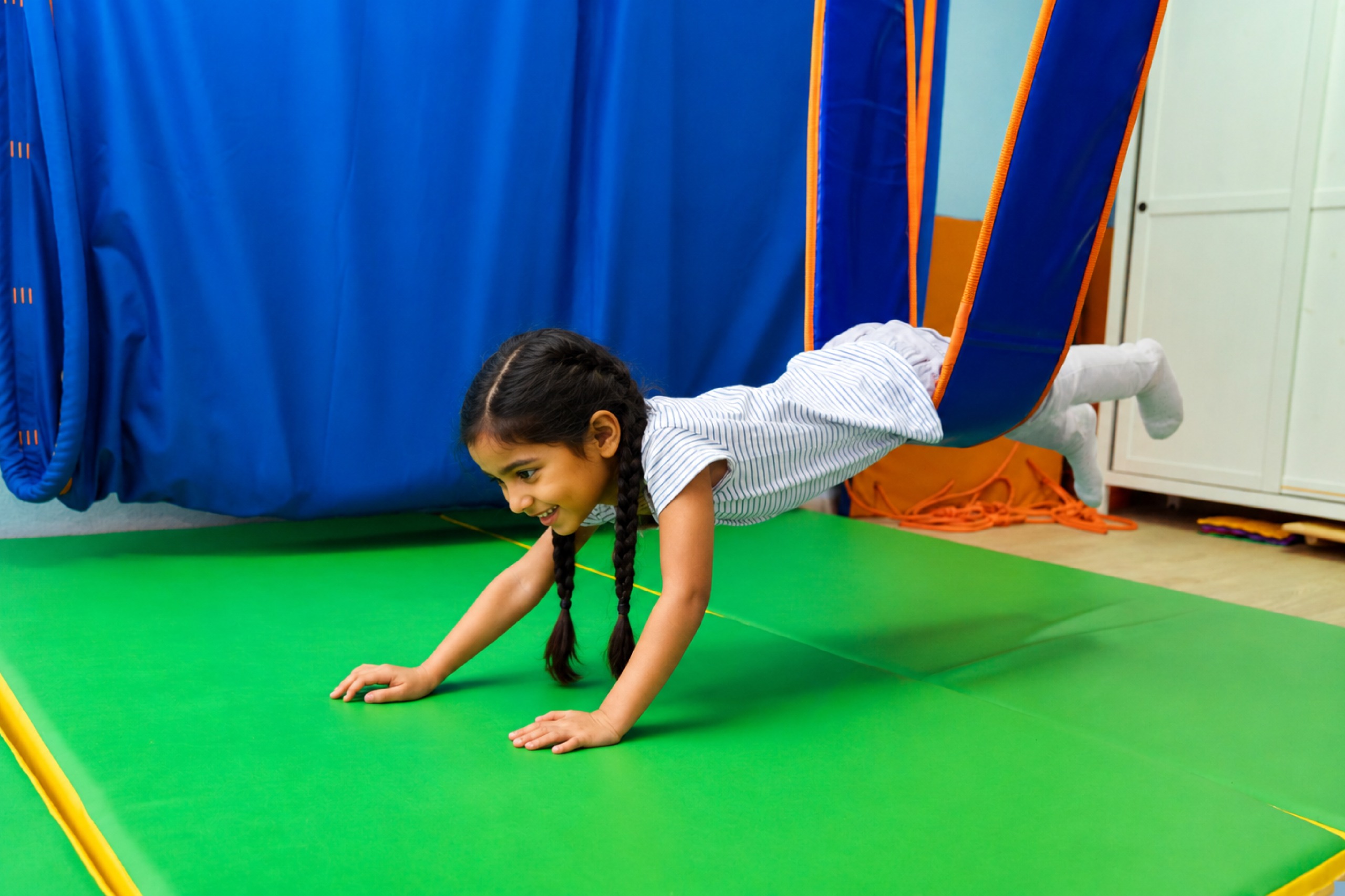
At Blossom Valley Therapy Centre, Sensory Integration Therapy Kottayam is designed to help children process sensory information more effectively, enabling them to improve attention, behaviour, motor coordination, emotional regulation and participation in daily life. Using individualized therapy plans and child friendly activities, therapists support children in becoming more confident and independent across home, school and community settings.
What Is Sensory Integration?
Sensory Integration is the brain's ability to receive, organize, interpret and respond appropriately to information received through the senses. This process allows children to perform everyday tasks such as playing, learning, communicating, maintaining balance and interacting with others.
When sensory information is processed efficiently, children can adapt to different environments and respond appropriately to daily experiences. Difficulties with Sensory Integration may affect how a child reacts to sounds, textures, movement, lights, touch or even body position, influencing behaviour, learning and social participation.
Developing effective sensory processing skills supports a child's overall physical, emotional and cognitive development.
Understanding Sensory Processing Disorder
A Sensory Processing Disorder occurs when the brain has difficulty organizing or responding to sensory information. As a result, children may become overly sensitive, under responsive or constantly seek sensory stimulation.
Children with Sensory Processing Disorder may experience challenges such as:
- Avoiding certain textures or clothing
- Extreme sensitivity to loud sounds or bright lights
- Difficulty maintaining attention
- Constant movement or excessive activity
- Poor balance and coordination
- Frequent emotional outbursts
- Difficulty with transitions
- Challenges in classroom participation
- Limited tolerance for grooming activities such as haircuts or nail trimming
Because sensory processing influences many aspects of development, these difficulties may also affect learning, communication, behaviour and social interaction.
How Sensory Integration Therapy Helps Children
Sensory Integration Therapy uses structured, play based activities to help children process sensory information more effectively. Rather than simply reducing unwanted behaviours, therapy addresses the underlying sensory challenges that may be contributing to those behaviours.
Individualized therapy sessions may focus on improving:
- Sensory regulation
- Balance and coordination
- Body awareness
- Motor planning
- Attention and concentration
- Emotional regulation
- Self confidence
- Participation in daily activities
By gradually introducing carefully selected sensory experiences, therapists help children develop more appropriate responses to their environment while building functional skills that can be applied in everyday life.
Signs Your Child May Benefit from Sensory Integration Therapy
Every child has unique sensory preferences, but persistent difficulties with sensory processing may indicate the need for professional evaluation.
A child may benefit from Sensory Integration Therapy if they:
- Become easily overwhelmed by sounds, lights or touch
- Frequently avoid certain food textures
- Constantly seek movement or physical activity
- Have difficulty sitting still
- Show poor balance or coordination
- Struggle with handwriting or fine motor tasks
- Experience frequent emotional meltdowns during routine activities
- Have difficulty focusing in school
- Avoid messy play or physical contact
- Demonstrate unusual responses to sensory experiences
Early identification allows therapists to provide targeted intervention that supports both development and everyday functioning.
Benefits of Sensory Integration Therapy
With consistent intervention, children often experience improvements across multiple developmental areas. The goal of Sensory Integration Therapy is not only to improve sensory processing but also to enhance everyday functioning and overall quality of life.
Some of the key benefits include:
- Better attention and concentration
- Improved emotional regulation
- Increased tolerance to sensory experiences
- Enhanced balance and coordination
- Stronger fine and gross motor skills
- Improved classroom participation
- Greater confidence during social interactions
- Better independence in daily activities
- Reduced anxiety during routine tasks
These improvements allow children to participate more successfully in family life, school and recreational activities.
Sensory Integration Therapy for Children with Autism and Other Developmental Conditions
Many children with autism, ADHD, developmental delays, cerebral palsy and other neurodevelopmental conditions experience sensory processing difficulties. Sensory Integration Therapy is often incorporated into comprehensive intervention programmes to help children regulate their responses to sensory input.
By addressing sensory challenges, therapy can support improvements in:
- Communication
- Behaviour
- Learning readiness
- Social participation
- Self care skills
- Play skills
- Emotional stability
When combined with speech therapy, occupational therapy, behavioural therapy and developmental intervention, sensory integration therapy contributes to more holistic developmental progress.
Family Involvement Enhances Therapy Outcomes
Parents play a significant role in helping children apply sensory strategies outside the therapy environment. Occupational therapists provide families with practical recommendations that can easily be incorporated into daily routines at home and school.
Parents may receive guidance on:
- Creating sensory friendly environments
- Managing sensory overload
- Establishing calming routines
- Supporting transitions
- Encouraging appropriate sensory activities
- Reinforcing therapy goals through everyday play
This collaboration ensures that children receive consistent support across all environments, promoting long term progress and greater independence.
Why Choose Sensory Integration Therapy Kottayam at Blossom Valley Therapy Centre?
Blossom Valley Therapy Centre provides specialized Sensory Integration Therapy Kottayam through experienced occupational therapists trained in sensory based interventions. Every child undergoes a comprehensive evaluation before therapy begins, allowing therapists to design individualized treatment plans based on each child's sensory profile and developmental goals.
As a multidisciplinary child development centre, Blossom Valley Therapy Centre combines Sensory Integration Therapy with speech therapy, occupational therapy, behavioural therapy, developmental therapy and psychological support whenever needed. This integrated approach ensures children receive comprehensive care that addresses every aspect of their growth and development.
With evidence based practices, modern therapy equipment, child friendly environments and active family participation, Blossom Valley Therapy Centre is committed to helping children overcome sensory challenges, develop greater independence and reach their full potential.