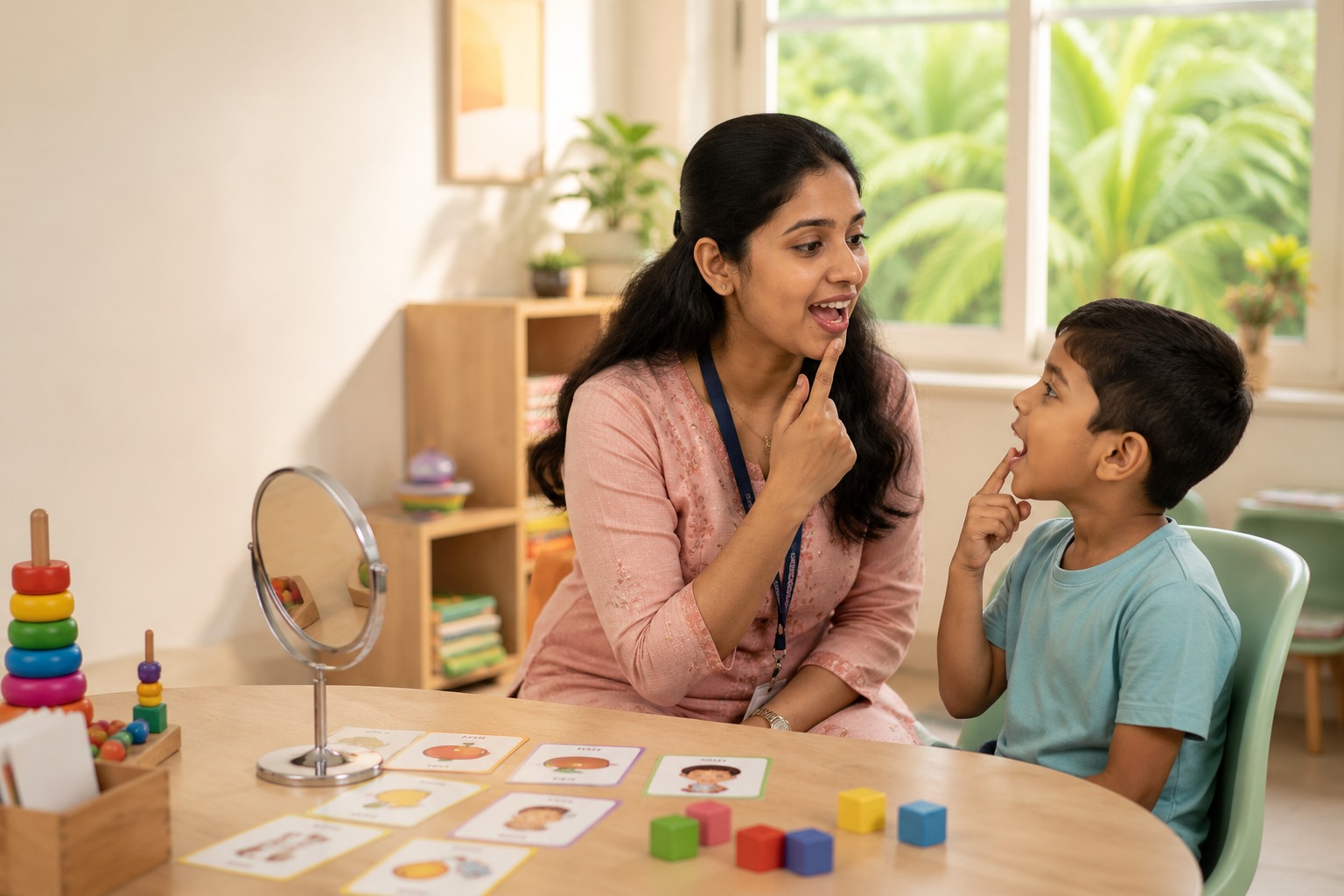
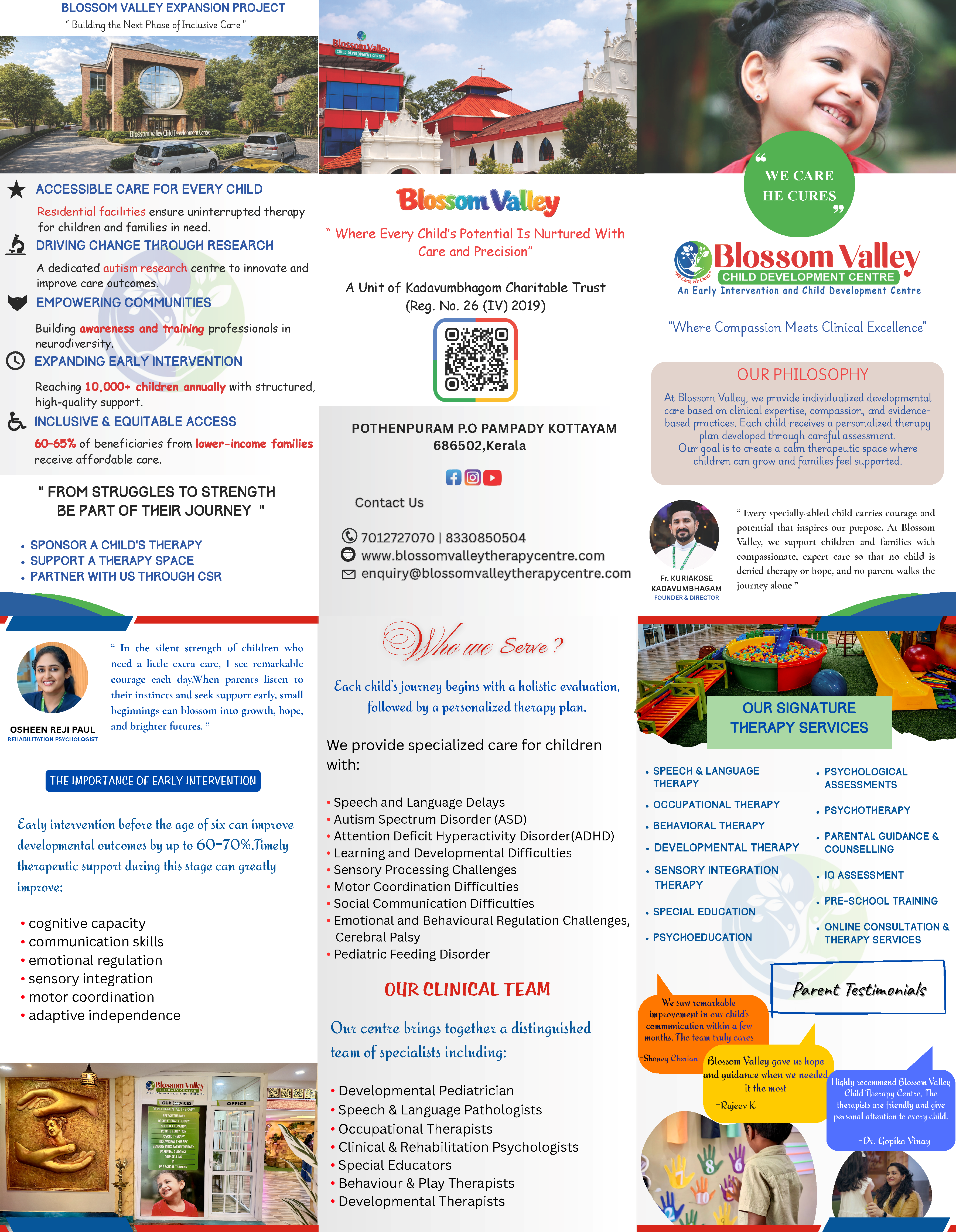
At Blossom Valley Therapy Centre, speech and language therapy is tailored to the individual needs of every child. Experienced speech language therapists use evidence based techniques to improve speech, language, social communication and functional communication skills while working closely with families to achieve meaningful progress.
Why Early Speech Therapy Matters
The early years are a crucial period for language development. Children who receive timely speech and language intervention often make greater progress in communication, social interaction, learning and independence.
Early speech therapy helps children:
- Express their thoughts and needs more effectively
- Improve understanding of language
- Build confidence in communication
- Strengthen social interaction skills
- Reduce frustration caused by communication difficulties
- Prepare for successful school participation
Early intervention also allows therapists to identify underlying developmental conditions that may affect communication and provide appropriate support before challenges become more significant.
Understanding Speech Delay and Autism
Many parents wonder whether delayed speech is simply a developmental variation or a sign of a more complex condition. While some children naturally begin speaking later than others, Speech Delay and Autism can sometimes occur together.
Children with Speech Delay and Autism may experience:
- Delayed first words
- Limited vocabulary
- Difficulty understanding language
- Reduced eye contact
- Limited use of gestures
- Difficulty engaging in conversations
- Repetitive speech patterns
- Challenges with social communication
A comprehensive assessment helps determine the cause of communication difficulties so that therapists can develop individualized intervention plans that address each child's specific needs.
How Speech Therapy for Autism Helps Children
Every child with autism communicates differently. Some children may have delayed speech, while others may have difficulty understanding language, using gestures or participating in conversations.
Speech Therapy for Autism focuses on improving both verbal and non verbal communication through structured, engaging and individualized activities.
Therapy may help children improve:
- Expressive language
- Receptive language
- Speech clarity
- Social communication
- Conversation skills
- Listening skills
- Vocabulary development
- Functional communication
- Play and interaction skills
Rather than encouraging speech alone, therapy helps children develop meaningful communication that supports success at home, school and in the community.
Supporting Communication with Augmentative and Alternative Communication
Some children with autism or significant communication delays find it difficult to express themselves using spoken language. PECS (Picture Exchange Communication System) is an evidence based communication method that helps children communicate by exchanging pictures representing objects, actions or requests.
PECS (Picture Exchange Communication System) helps children:
- Request preferred items
- Express wants and needs
- Improve functional communication
- Develop social interaction
- Reduce communication related frustration
- Build the foundation for spoken language in some children
Therapists introduce PECS in a structured and individualized manner, gradually expanding skills as the child progresses. For many children, PECS serves as an effective bridge toward more advanced communication methods.
Understanding Non Verbal Autism Therapy
Not every child with autism develops spoken language in the same way. Some children remain minimally verbal or non verbal while still having the ability to communicate through alternative methods. Non Verbal Autism Therapy focuses on helping children develop effective communication using strategies that match their individual abilities.
Non Verbal Autism Therapy may include:
- Visual communication systems
- Gestures and body language
- PECS (Picture Exchange Communication System)
- Augmentative and Alternative Communication (AAC)
- Play based communication activities
- Social interaction training
- Functional communication strategies
The goal is to ensure every child has a reliable way to communicate, reducing frustration and encouraging meaningful interaction with family members, teachers and peers.
Individualized Therapy for Every Child
No two children have identical communication needs. At Blossom Valley Therapy Centre, every child begins therapy with a comprehensive speech and language assessment. This evaluation helps therapists understand the child's current communication abilities, strengths and areas requiring support.
Based on the assessment, individualized therapy goals may focus on:
- Speech development
- Language comprehension
- Vocabulary building
- Pronunciation
- Social communication
- Conversation skills
- Alternative communication methods
- Feeding and oral motor skills when appropriate
Therapy plans are reviewed regularly to ensure continuous progress and to adapt goals as children develop new communication abilities.
Family Participation Improves Therapy Outcomes
Parents and caregivers play an important role in helping children practice communication skills outside the therapy setting. Speech therapists work closely with families by providing practical techniques that can be incorporated into daily routines.
Parents receive guidance on:
- Encouraging communication during play
- Creating language rich environments
- Responding positively to communication attempts
- Using visual supports at home
- Reinforcing therapy goals during everyday activities
When communication strategies are consistently practiced both at home and during therapy sessions, children are more likely to generalize their newly learned skills into real life situations.
A Multidisciplinary Approach to Communication Development
Communication development is closely connected to many other developmental areas. At Blossom Valley Therapy Centre, speech therapists collaborate with occupational therapists, behavioural therapists, psychologists, developmental paediatricians and special educators to provide comprehensive, child centred care.
This multidisciplinary approach ensures that communication goals are integrated with behavioural, sensory, educational and developmental interventions, helping children make meaningful progress across multiple areas of development.
Why Choose Blossom Valley Therapy Centre?
Blossom Valley Therapy Centre offers evidence based Speech Therapy for Autism and other language disorders delivered by experienced speech language therapists who specialize in supporting children with speech delays, autism, developmental disorders and communication challenges. The centre provides individualized intervention programmes that may include PECS (Picture Exchange Communication System), language development, articulation therapy, social communication training and Non Verbal Autism Therapy, depending on each child's unique needs.
With a multidisciplinary team, personalized treatment plans, family centred care and a strong emphasis on early intervention, Blossom Valley Therapy Centre is committed to helping every child build effective communication skills, develop confidence and achieve greater independence in everyday life.